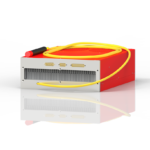
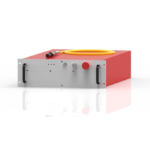
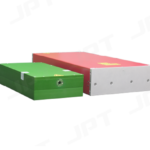
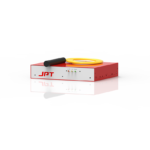
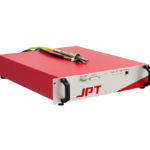
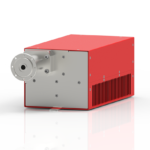
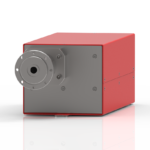
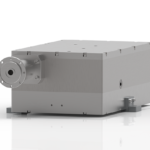
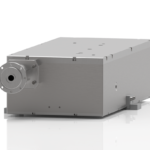
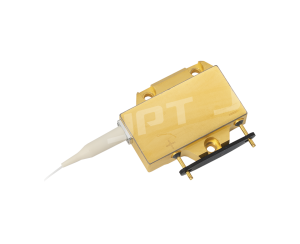
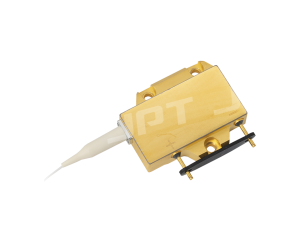
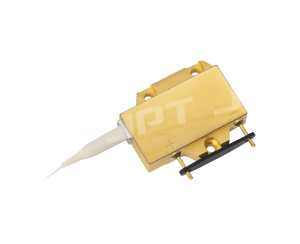
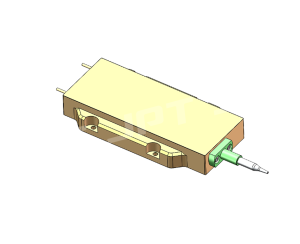
M SERIES
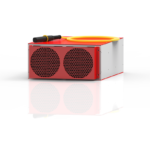
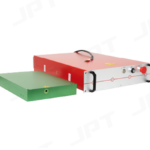
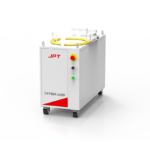
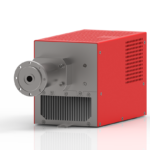
CL SERIES
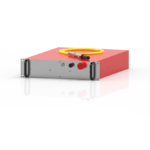
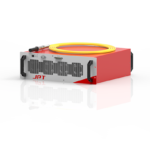
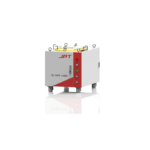
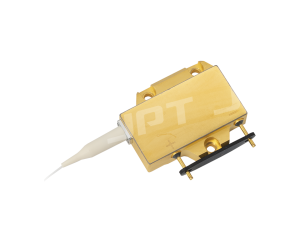
GR SERIES
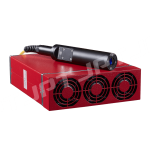
1. Both laser offers similar marking applications but MOPA laser offers great flexibly and adjustment of various laser parameters e.g. prf, pulse duration, peak power, pulse shape etc.
2. In color marking, MOPA laser offers more bright and clear marking compared to Q-switched laser marking.
3. Higher Pulse Repetition Frequency of MOPA Laser helps in creating precision marking.
4. The edges of marked feature are generally yellow and rougher in Q-switched however, in case of MOPA laser; edges are smooth without being yellow.
1. Cutting gold silver sheet
2. Engraving of metallic and non-metallic materials
3. Engraving of curved surface like wedding ring or bracelet
4. Colorful marking in stainless steal
5. Black marking in oxygen aluminum
Stainless Steel
Aluminum
Anodized Aluminium Oxide (AAO)
Titanium
Platinum
Chrome
Copper
Coating materials
Polyethylene
ABS plastic
Carbide
Polycrystalline Diamond
PVC
PES
- Rubber etc.
The variation in mark color is achieved by controlling the laser energy. When the MOPA laser’s energy is increased the color in exposed area changes in the following sequence:
Orange-red-purple-blue-green,
Blue-blue,
Green-green-yellow,
Green-yellow-orange-red.
MOPA stands for Master Oscillator Power Amplifier. Master Oscillator can produce light with a lesser amount of energy while Power Amplifier amplifies the light to achieve required power levels. At present, it is most advanced technology that provides great flexibility and customization of operation.
Metals like gold, silver, aluminum, copper, titanium, platinum, brass, Tungsten, chrome, Nickel. Besides metals, ceramic, fiber glass and carbon, plastics and polymers etc.
Fiber laser is a kind of DPSS laser in which the doped fiber optics cable is used as gain medium. It works in two mode – pulsed and CW (Continuous Wave). A CW DPSS laser is created through optical pumping of gain medium.
CW (Continuous Wave) is continuous emission of laser energy while pulsed laser is characterized by the duration of emission. All the laser energy is contained in a short burst called pulse after which the output of laser becomes zero.
DPSS laser is a solid-state laser that uses a gain medium that is solid. The gain medium of a DPSS laser consists of a glass or crystalline host material. The most common host materials are neodymium-doped yttrium aluminum garnet (Nd: YAG), ytterbium-doped glasses and neodymium-doped glass (Nd: glass). The gain medium is optically pumped by using laser diodes. The DPSS laser can generate a wide range of wavelengths based on the gain medium material. From the fundamental wavelengths, additional wavelengths can be generated by frequency doubling or second harmonic generation.
The output power of the DPSS laser depends not only on the diode power but also on other parameters such as temperature of the laser, crystal gain medium, and optical assembly.
The currently available minimum pulse width of the DPSS laser is about 8-10ns. This pulse width is achieved without effecting the laser operation and without any strange transient responses. If you need any other pulse width, we can customize our laser according to your specifications. Customizing lasers for different application is one of our advantages.
Diode-pumped solid-state laser
DPSS lasers generally have a higher beam quality than diode lasers.
DPSS laser can reach very high powers and at the same time maintaining good beam quality. On the other hand, diode lasers can only reach a few hundred milliwatts unless they operate in multiple transverse modes. Such multi-mode lasers have a larger beam diameter and a greater divergence, which often makes them less desirable for single-mode operation.
In a DPSS laser, the crystal is pumped by the diode acts as its own laser, hence the quality of the output beam is independent of that of the input beam.
Still Need Help
Chat with us
10am to 8pm EST.
Email Us
support@zensia.com